
The First Spell to Break
Before you can receive the medicine, you have to stop believing it’s poison.

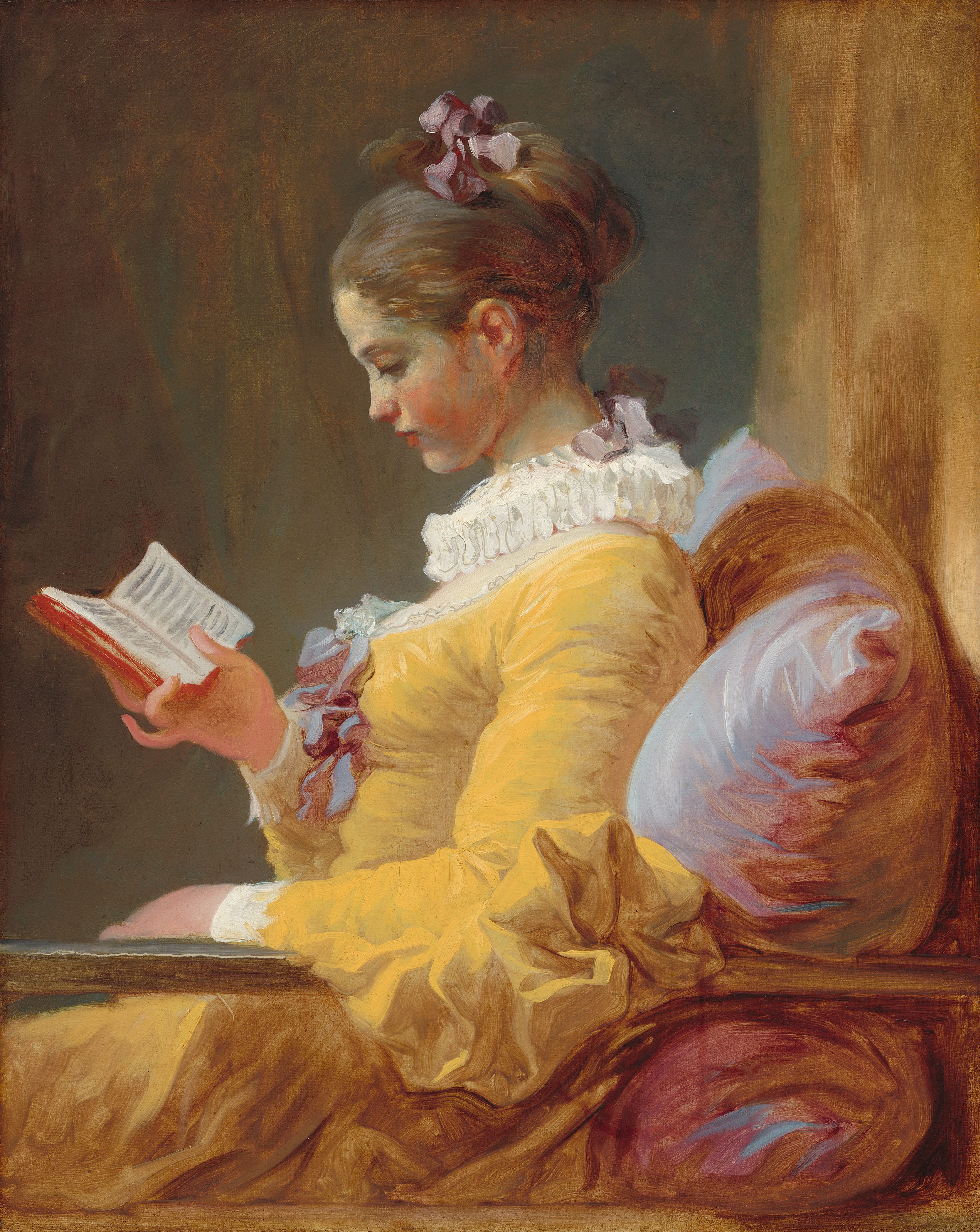
Here’s a scene every romance reader knows.
Someone asks what you’re reading. And for a split second, you calculate. Who’s asking. What they’ll think. Whether this is a “I’m reading a novel” situation or a “OK fine, it’s about an orc warlord and yes there’s a mating bond and yes he has tusks” situation.
You’ve learned to translate. At work it’s “just a fun book.” At dinner with the well-read friends it’s “a fantasy romance thing, it’s actually quite good.” Only alone, in the bath, on the couch at midnight, in the private architecture of your Kindle library that nobody else will ever see, are you reading what you’re actually reading without performing a single thing about it.
The bookshelf visitors see and the Kindle library nobody sees. Two reading lives. Not because you have two selves, but because the culture only respects one of them.
I want to sit with that word for a moment: performing. Because we do perform our reading, don’t we? We curate what’s visible. We select from the approved menu. Not because the approved menu is loveless, you genuinely love Austen, you genuinely adore Jane Eyre, but because the selection is shaped by something other than pure hunger. It’s shaped by what makes us legible. What signals that we’re serious, intelligent, worth taking seriously as thinkers.
There’s a difference between performing your reading life and actually living it.
Performance is curating what’s visible, selecting from the approved menu, signaling seriousness, keeping the hunger private. Authenticity is reaching for what you actually want without translating it for someone else’s comfort. Most of us have been performing our reading lives for so long we’ve forgotten there’s another way.
If this is you, I want you to know: the split isn’t yours. It was installed.
The Spell Inside the Phrase
There’s a phrase so normalized we’ve stopped hearing what it actually says.
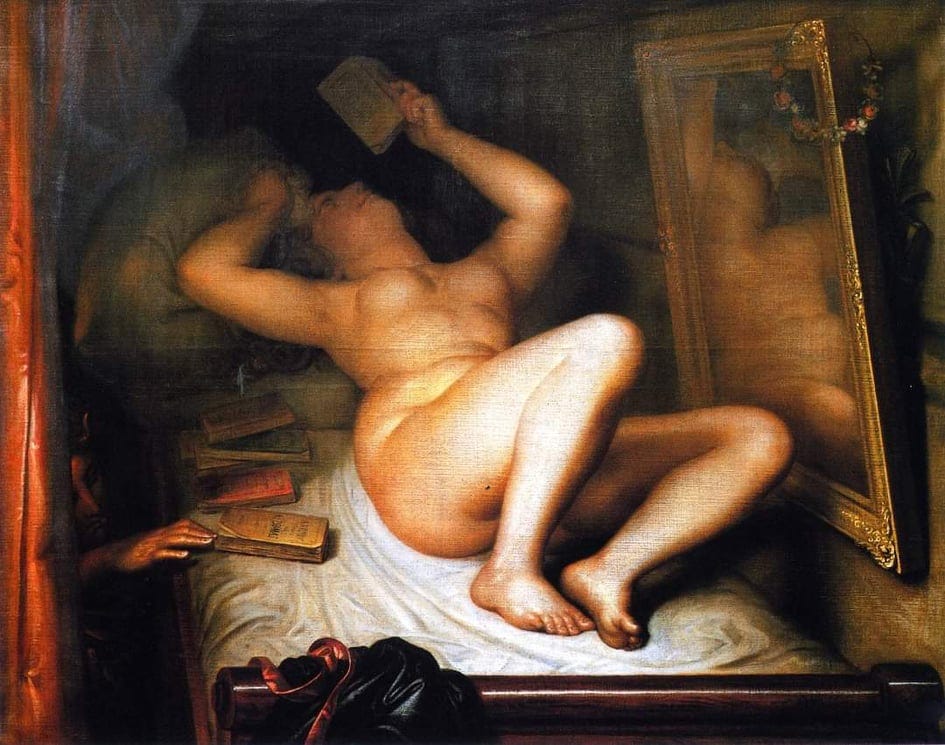
Guilty pleasure.
Two words doing enormous cultural work. “Guilty,” meaning you should feel bad about what gives you joy. “Pleasure,” framing the experience as consumption, passive and mindless, sugar for the brain. Put them together and they say: your appetite requires an apology.
"Your appetite requires an apology." That's what "guilty pleasure" actually says.
The phrase has deep roots, deeper than literary snobbery. In our cultural unconscious, pleasure and sin are practically synonyms. Pleasure is suspect. Pleasure is the serpent’s offer. Pleasure is what leads you astray. Joy that comes too easily must be dangerous, because the culture runs on the assumption that anything worth having should require suffering first. Homework before recess. Discipline before reward. Earn your rest. The idea that something could be healing and enjoyable, that the medicine could taste good, is almost heretical. It breaks the logic of a system built on the assumption that growth requires pain.
And then there’s the other blade of the scissors: it’s not just that romance is sinful pleasure. It’s that it’s stupid pleasure. Not deep. Not nuanced. Not worthy of a thinking person’s time. Formulaic. Predictable. The plots are too simple. The endings are too happy. The feelings are too big. It’s not literature.
Romance is Cinderella before the ball. Doing all the work, carrying the household, and still dressed in rags, still waiting for the culture to see what she’s actually made of.
Literature keeps her poorly dressed on purpose. Because if the culture admitted that the most consumed fiction on earth is also doing the most sophisticated emotional and psychological work available in narrative form, it would have to reckon with the fact that millions of women have been doing something extraordinary under the guise of something trivial. And that reckoning would upset quite a few carts.
But the guilty pleasure framework isn’t only about reading. It’s part of a much larger cultural project: the monitoring of women’s appetites. Don’t eat too much. Don’t want too much. Don’t be voracious. Don’t take up space with your hunger. The same culture that calls romance “too much” calls women’s anger “too much,” calls women’s desire “too much,” calls women’s bodies “too much,” unless they’re being consumed by someone else’s gaze, in which case they’re never enough.
Romance is one more arena where women’s hunger is treated as something that needs managing. And the guilty pleasure label is the leash.
If you already feel seen, subscribe. I'm writing a series on what romance novels are actually doing, and this is just the beginning.
The New Leash
And now there’s an updated version of the same move, wearing a lab coat instead of a pulpit.
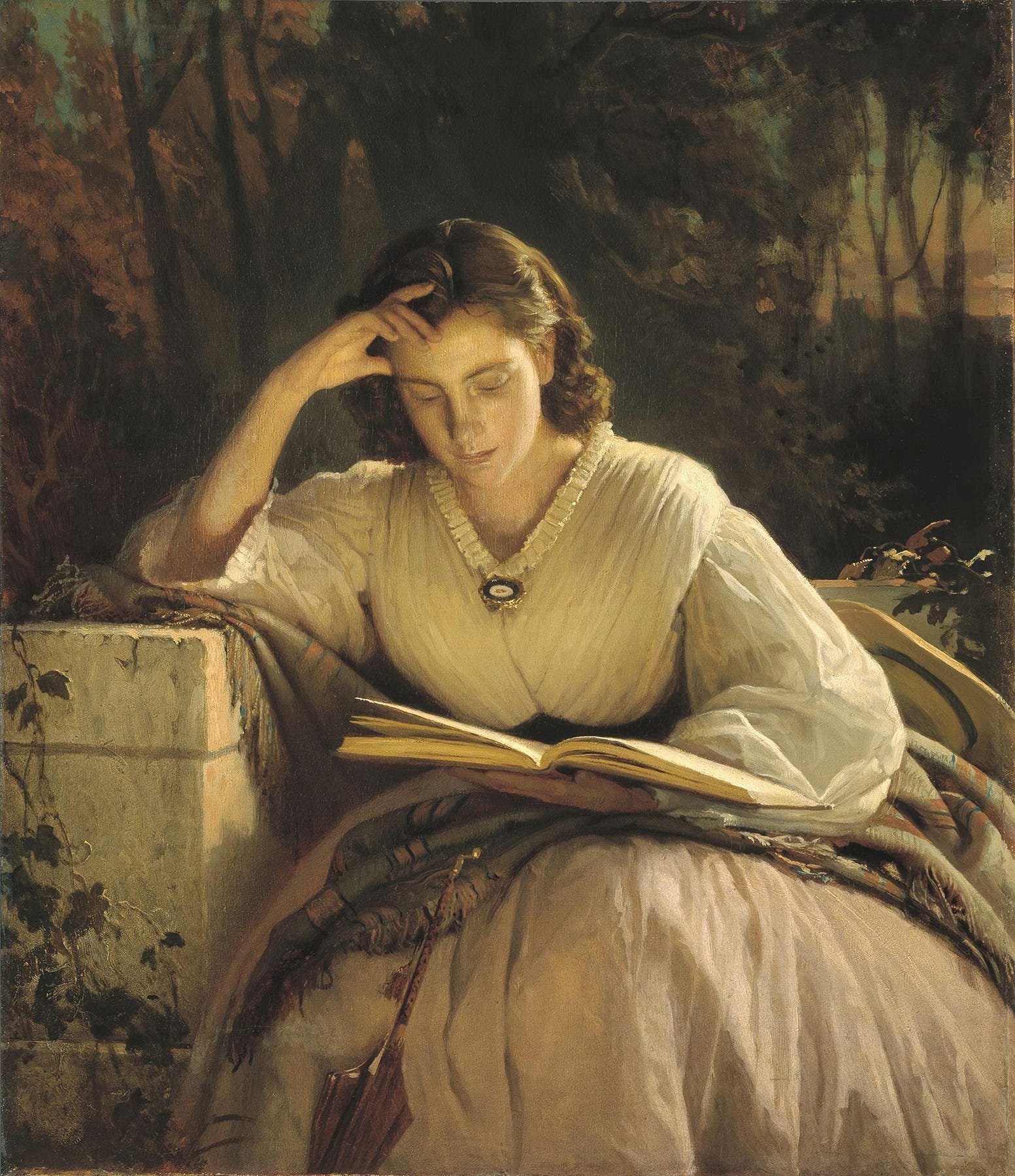
The dopamine framing. The addiction language. First the culture said your reading was guilty. Now it says you might be addicted, to your phone, to your Kindle, to the neurochemical hit of a happy ending. You’re not enjoying a book, you’re chasing a dopamine spike. You’re not following your appetite, you’re feeding a compulsion.
I want to be clear: I think the conversation about compulsive consumption is worth having. It applies to many things in our overstimulated world. But when the addiction framework gets applied to women’s reading, specifically to romance, something else is happening. The vocabulary has changed, but the message hasn’t: the thing your body reaches for can’t be trusted.
And here’s what that framing misses entirely: there is a vast difference between consuming and digesting.
Consumption is passive. Binge it, forget it, reach for the next one. A book goes in and nothing comes out except the urge for another hit. That’s the version of romance reading the culture sees, and honestly, sometimes that IS how we read. And there’s nothing wrong with that. Sometimes mindless consumption is exactly what your system needs. Sometimes it’s the entryway, the first turn of a spiral that can go much deeper. The problem isn’t starting there. The problem is when the cycle of consume-forget-repeat becomes the only mode available, when the spiral never descends, when the books pass through you without leaving anything behind. Because the potential is always there, in every book, even the ones you grab without thinking, to shift from consuming to digesting. To move from “what happens next” to “what is this doing to me.” That shift doesn’t require effort so much as it requires curiosity.
And curiosity is the opposite of guilt.
Digestion is what happens when you bring that curiosity to what you’re reading. When you notice that a particular scene made your chest tight, or that you’ve reread a passage three times not because you missed something but because something in it is working on you. When you start to sense that the book isn’t just entertainment but is processing something your conscious mind can’t quite hold.
I made this same argument almost twenty years ago in my master’s thesis, writing about romantic comedies. I argued that there’s a difference between watching a rom-com and entering its dream, between consuming the film and letting the film work on you the way a dream works on you while you sleep. That distinction applies to romance novels even more powerfully, because the experience is more intimate, more sustained, more embodied. You spend hours inside a romance novel. Your nervous system responds to it. Your body doesn’t know the difference between vividly imagined experience and lived experience, which means what happens in those hours isn’t “just reading.” It’s a form of practice.
The difference between consuming romance and digesting it is the difference between drinking wine and tasting it.
And the difference between tasting it and understanding why this particular wine, at this particular moment, is exactly what your palate needed.
That shift, from consumption to digestion, is where the medicine begins. But you can’t get there while you’re still apologizing for holding the glass.
The Longest Loop
I want to tell you a story about how I broke my own spell. It took me nearly twenty years.
I finished my master’s degree at Pacifica Graduate Institute, a counseling psychology program with a Jungian emphasis, and it nearly killed me with its beauty and its demands. Three years of working full-time, flying to Santa Barbara for intensive weekends, writing my thesis, completing a traineeship. When I was done, I was so profoundly exhausted that I couldn’t read anything “serious.” My system physically refused it.
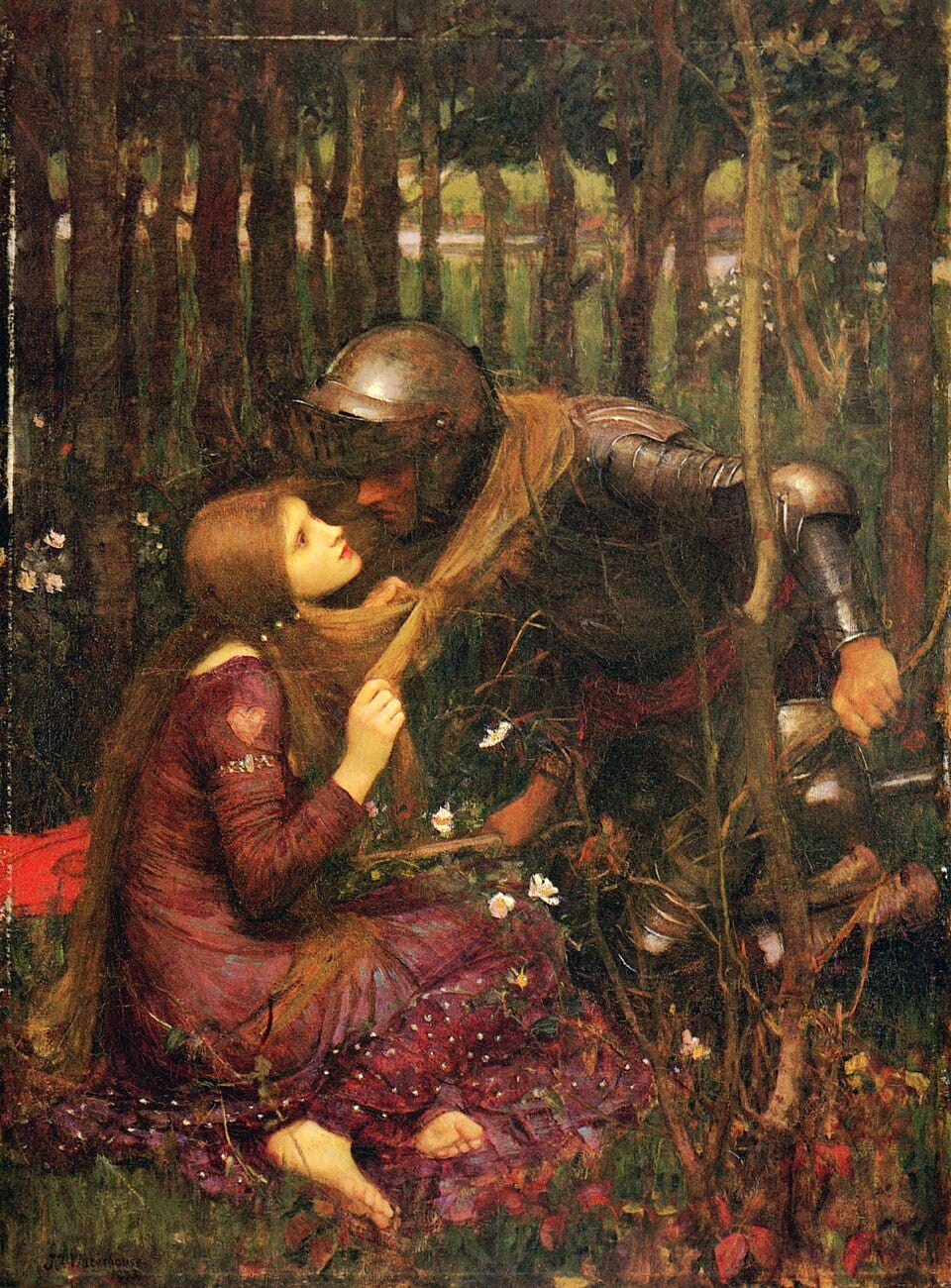
So I found myself at Powell’s Books here in Portland, wandering into the romance section. I picked up a few novels, nothing I’d normally have reached for. And one of them had a hero who was partially beast. Not a metaphorical beast. An actual beast, half-monster, half-man. Before monster romance had a name, before BookTok made orc romances go viral, I was sitting in my apartment reading about a woman falling in love with a creature, and I was thrilled.
I told my friend about it. She laughed. Not cruelly, affectionately, the way friends do when they’re genuinely surprised. But she also wondered aloud if she should be worried about me. My other friends made similar noises. What happened to the serious reader? The woman with the master’s in counseling psychology? Why was she reading books about monsters when she should be reading... what? Jung? Case studies? The kind of books that signal depth rather than desire?
I laughed with them in embarrassment, minimizing my own discomfort the way you do when you sense that what you love has just been weighed and found wanting.
But the shame burned. Quietly, in the background, the way shame does. Not screaming, just humming. A low-grade signal that said: this thing that gives you joy is not acceptable in the rooms you want to belong to.
So I put the books back in the closet. I returned to Jane Eyre. To Gaskell’s North and South. To Austen. Still romances, all of them, but credentialed romances. Canonical. Literary. Safe to mention at dinner without anyone questioning your cognitive function.
Nobody stages an intervention when you’re reading Elizabeth Bennet. They only worry when it’s orcs.
I kept a secret, though. Somewhere underneath the approved reading, I knew I could write a PhD tracing Persephone’s myth through Jane Austen, following the dark Other across centuries of women’s fiction. I even interviewed at a university in the UK to do exactly that work, weaving literature with Jungian psychology. They said I wasn’t ready yet.
They were right. But not for the reasons they thought.
I wasn’t ready because I hadn’t lived it yet. I had the intellectual framework, the myths, the archetypes, the depth psychology, but I hadn’t been broken open by the experience that would give the work its authority. I needed to live my own romance first, with its highs and its lows. I needed marriage. I needed the death of both parents. I needed burnout, career thresholds, reimaginings. I needed to be utterly spent in my own cave year before I could return, without any shame, to that earlier spark.
My thesis, The Healing Power of Fluff, which explored romantic comedies as dreams, wasn’t forgotten or abandoned. It was composting. For nearly twenty years it sat underground, drawing nutrients from everything I lived, until the cave year cracked the surface and it pushed through. And what pushed through wasn’t the same thesis. It was deeper. Wider. It wasn’t about romantic comedies anymore. It was about romance novels. It wasn’t about finding the beloved out there. It was about following desire to find yourself. Same question, larger territory. And this time, romance was the piece that brought everything together. The depth psychology, the astrology, the fairy tales, the mythology. All of it had been waiting for this last arrival.
The thing I’d been taught to dismiss was the key to the whole architecture.
Only last year did I see it clearly: the thesis wasn’t composting by accident. It was composting by design. The work needed me to live before I could write it.
The PhD would have been the head version. What I’m building now is the body version.
The Return
Last year, 131 romance novels later, I started telling my friends again.
This time I was reading monster romance, alien romance, dark romance, cozy small-town contemporary, fantasy romance. The full spectrum. I’d become a democratic reader, following my desire, my mood, what my body gravitated toward. I could see the depth, the medicine, the potential healing in a book by an obscure indie author writing sentient plant romance just as clearly as I could see it in a beautifully crafted bestseller. I’d learned to trust the process instead of curating it for other people’s approval.
My friends raised their eyebrows again. But this time I held my ground. Not because I was defending romance. Defending is a reactive posture, and I was done reacting. I held my ground because I could see what was happening. I could see the medicine in these books, regardless of where they sat on the cultural respectability ladder. I wasn’t making a case. I was describing what I’d found.
And something shifted. My firmness made people curious. If I, with my MA, my depth psychology training, my years of studying myth and archetype, was this serious about romance novels, then maybe there was something worth looking at. Some of my friends picked up a romance novel. Just to test it. Just to see what I was seeing.
That’s how the spell breaks. Not through arguments. Not through academic papers or cultural criticism or think pieces. Through someone you trust refusing to be ashamed anymore.
One person stops hiding, holds her ground with quiet clarity, and the people around her start to wonder what she’s seeing that they’ve been trained not to look at.
You might be that person for your own circle. You might already be.
The Inoculated Ones
Not everyone carries this prejudice. Some women were introduced to romance early, by someone who loved the genre openly, who read without apology, who handed over a book and said you’ll love this without a single caveat or disclaimer. Permission was modeled before the culture’s judgment could land.
These women read freely. They never needed to “come out” as romance readers because nobody told them to go in the closet. They don’t hide their Kindles. They don’t translate what they’re reading for different audiences. They just... read.
What that tells us is important: the prejudice isn’t natural. It’s learned. It’s cultural software running so deep that most of us don’t know it’s there until something strips us bare enough to override it. Grief did that for me. Exhaustion did it. The body’s appetite finally overruled the mind’s judgment, and what it reached for was the very thing I’d been taught to dismiss.
If you were introduced to romance early, you may have been inoculated against the worst of the cultural prejudice before it could take root. If you weren’t, if you had to find your way to these books through the back door of a hard year, then the prejudice was your first threshold crossing. And crossing it is itself an act of reclamation.
Either way, you’re here now.
What Becomes Visible
Once the prejudice clears, once you stop apologizing for what you read, something becomes visible that was hidden before.
Your reading patterns aren’t random.
The books that found you during specific passages of your life weren’t accidents. The monster romance I reached for after Pacifica, when my system was too depleted for anything “serious.” The 131 books during my cave year, each one arriving with a precision I couldn’t see at the time. The particular tropes I return to during particular seasons: enemies-to-lovers when I’m angry, found family when I’m lonely, second chance when I’m grieving something I thought was finished.
There’s a map there, drawn by my own hand without my knowing it, one book at a time.
Now, I know what some of you are thinking: but I just want to enjoy my books. I don’t want to analyze everything. Can’t a romance novel just be fun?
Yes. Absolutely. A romance novel can just be fun. And sometimes that’s exactly what it should be. I’m not suggesting you turn every reading experience into a psychology seminar.
But here’s what I’ve found: seeing the patterns doesn’t take the pleasure away. It deepens it. The way learning about wine doesn’t ruin the drinking. It makes you taste more, notice more, appreciate why this particular glass at this particular moment hits the way it does.
And there’s something else, something I think matters more. When you start seeing your reading patterns, you discover that you have more guidance in your life than you ever gave yourself credit for. Your pleasure reading, the thing you dismissed as trivial, as escape, as “just” entertainment, has been pointing you somewhere all along.
The small pleasures, it turns out, often carry the strongest medicine.
But you have to bring awareness. Not analysis. Awareness. The difference between reading a book and letting the book read you.
Look at your shelf, both shelves, the public one and the private one, and ask: what was happening in my life when I reached for this?
The answer is usually right there. Obvious once you stop dismissing the question as silly.
Your reading life has been tracking something all along. Not consuming. Digesting. Processing what your conscious mind couldn’t hold, through stories your body knew you needed.
The shame kept you from seeing it. With the shame gone, the map appears.
The First Door
This is the first threshold. Before you can receive what these books are offering, before you can decode the patterns, read the map, understand why certain stories grip you and others slide off, you have to break the first spell. The one that says what you’re holding is trivial. That your appetite is a weakness. That pleasure needs to be earned or excused or hidden.
It doesn’t.
The guilty pleasure, stripped of its judgment, is just your compass turning toward what you need.
And that compass, the one that lives in your body, in your hunger, in the irresistible pull toward certain stories at certain moments, is more trustworthy than any reading list, any literary prize committee, any cultural authority telling you what counts as serious.
The question isn’t whether to follow it. The question is whether you’re willing to bring curiosity to where it leads.
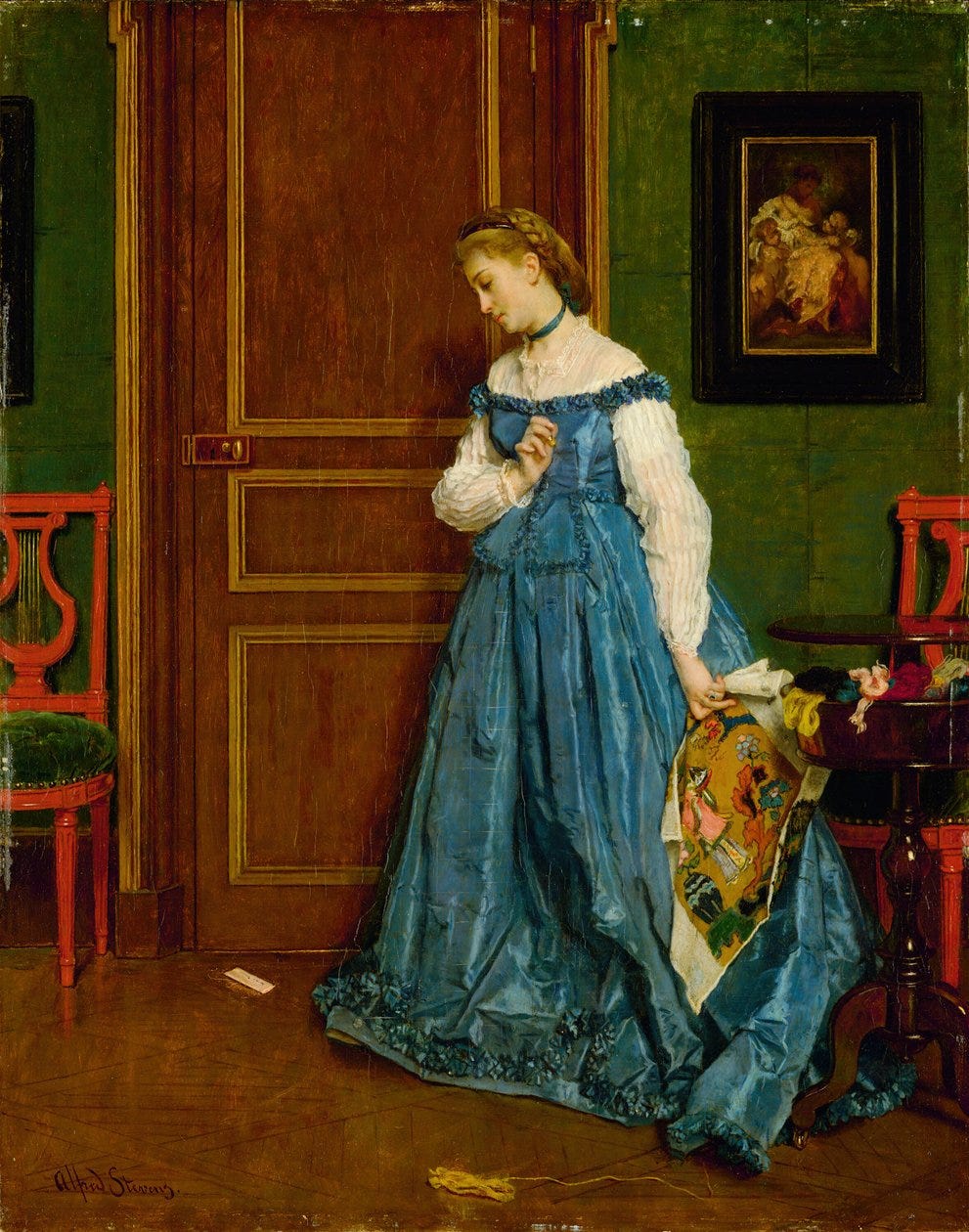
Forbidden Doors
If something in this essay felt like recognition, if you read it and thought she’s talking about me, I want to tell you about something I’ve built.
Forbidden Doors is a six-week intensive for women who sense that their romance reading is doing something more than passing the time. It’s the space where your reading life becomes your map instead of your secret.
Each week opens one of five doors that culture teaches women to close: body, rage, pleasure, instinct, sovereignty. There’s teaching to ground us, guided imagination to take us deeper, and real conversation in the circle, the kind most book clubs never get to, because most spaces aren’t built to hold it.
You don’t need to have read any particular book. You don’t need a background in psychology or mythology. You just need to be a woman who reads romance and is ready to ask: what does my reading life know about me that I haven’t named yet?
Six Saturday mornings. A small circle. We begin May 16.
Some weeks you’ll laugh. Some weeks, something will land that makes your eyes sting. Every week, you’ll discover that other women are standing at the same door you are.
If something in this essay, or in your own reading life, made you lean forward, this might be your next threshold.
A resounding yes to all of this!! It’s always bothered me that people are dismissive at best, worried at worst about my preference for romance. Meanwhile, no one bats an eyelid at someone else’s obsessive reading or crime or horror. If my reading of romance could ‘give me unrealistic expectations’ then surely reading about serial killers is more worrying? Except everyone just accepts that it’s possible to enjoy Silence of the Lambs without wanting to be Hannibal Lecter. Thank you for all your work understanding and articulating this!!
Absolutely. As an obsessive romance reader for many years I often think that making fun of romance is just another form of patriarchy. Why should I feel embarrassed to read romance that is about love between people (or monsters) while my husband doesn’t have to feel embarrassed watching one apocalyptic murderous story after another. Why are thriller, horrors and criminals valued higher? Because of patriarchy.